


Every semester, when I introduce the cardiovascular system in my Anatomy and Physiology classes at San Bernardino Valley College, I ask my students to name the most important organ in the body. Almost everyone says the heart. I smile, because they are partly right. But I always follow up with a second question: what keeps that blood moving once it leaves the heart? The answer is the vessels, and that is where the real story begins.
The Heart Is a Pump, Not the Whole System
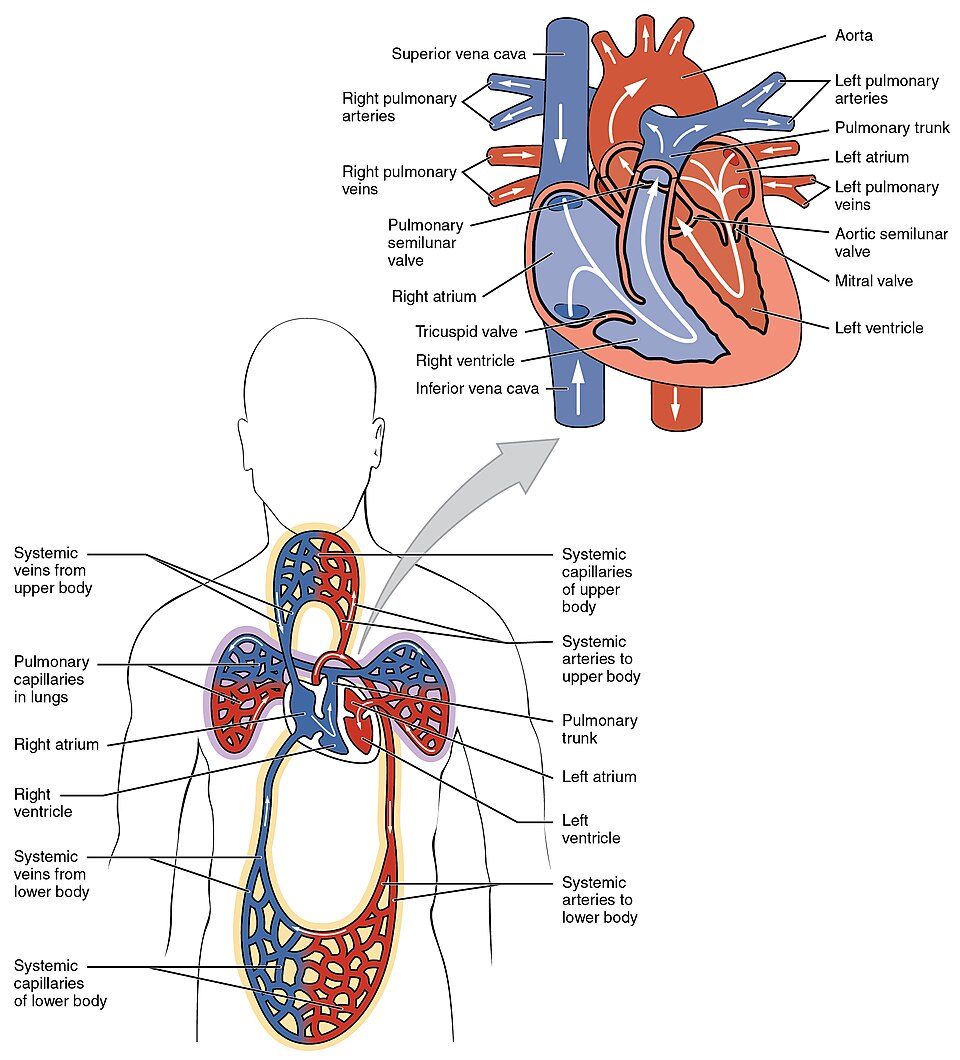
The heart is a muscular pump with four chambers. The right side receives deoxygenated blood from the body and sends it to the lungs. The left side receives oxygenated blood from the lungs and pushes it out to every tissue. In a resting adult, the heart beats roughly 60 to 100 times per minute, and each contraction moves about 70 milliliters of blood. That is impressive, but a pump only works if it has a circuit to push through.
That circuit is made up of arteries, veins, and capillaries. Arteries carry blood away from the heart under high pressure. Their thick, elastic walls stretch with each beat and then recoil, which keeps blood flowing even between contractions. Capillaries are so thin that red blood cells must pass through them single file, and their walls are only one cell thick. This is where oxygen, nutrients, and waste actually cross into and out of tissues. Veins return blood to the heart at much lower pressure, so they rely on one-way valves and the squeezing of nearby skeletal muscles to keep blood moving upward, especially in the legs.
Why Blood Pressure Depends on More Than the Heart
When patients hear the words blood pressure, they usually think only about the heart. In reality, blood pressure is a product of three main factors: cardiac output, which is how much blood the heart pumps per minute; peripheral resistance, which is how tight the small arteries and arterioles are; and blood volume. If any one of these shifts, pressure shifts too.
Consider how the body responds to stress. The sympathetic nervous system signals the heart to beat faster and more forcefully, and it constricts arterioles in some regions while dilating them in active muscles. The kidneys adjust blood volume by regulating sodium and water. Hormones such as angiotensin II and antidiuretic hormone fine-tune vessel tone and fluid balance. The vessels are not passive tubes. They are active participants that respond constantly to what your body needs.
The Role of Baroreceptors
Specialized pressure sensors called baroreceptors sit in the walls of the aorta and carotid arteries. When pressure rises, they send signals to the brainstem, which responds by slowing the heart and dilating vessels. When pressure drops, the response reverses. This reflex operates within seconds, and it is one reason you can stand up from a chair without fainting, most of the time.
Common Misconceptions My Students Bring to Class
- Veins carry only deoxygenated blood. This is generally true for systemic veins, but pulmonary veins carry oxygen-rich blood from the lungs to the heart.
- Arteries are always red. Arteries carry oxygenated blood in most of the body, but the pulmonary arteries carry deoxygenated blood to the lungs.
- Cholesterol is simply bad. Cholesterol is essential for cell membranes and hormone production. The problem arises when lipoproteins deposit plaque in arterial walls over many years.
- A healthy heart means healthy vessels. Arteries can stiffen and narrow even when the heart is strong, which is why blood pressure often rises with age.
Why Vessel Health Matters So Much
Atherosclerosis is the gradual buildup of fatty plaque inside arterial walls. It narrows vessels, reduces blood flow, and can rupture, triggering a clot that blocks flow entirely. Heart attacks and strokes are often the end result of decades of vessel damage rather than a sudden heart failure. The good news is that vessel health responds well to daily habits. The endothelium, the thin layer of cells lining every vessel, releases nitric oxide, a molecule that relaxes smooth muscle and keeps vessels flexible. Regular aerobic exercise, a diet rich in vegetables, whole grains, and unsaturated fats, and avoiding tobacco all support healthy endothelial function.
A Practical Takeaway for Your Own Circulation
If you remember only one thing from this article, let it be this: your cardiovascular system is a network, and the vessels are as important as the pump. You can support both starting today. Here is where I would begin:
- Move your body daily. Aim for about 150 minutes of moderate aerobic activity each week, such as brisk walking, cycling, or swimming. Your vessels will thank you.
- Get up and move your legs during long periods of sitting. Calf muscle contractions help push blood back through the veins against gravity.
- Know your numbers. Check your blood pressure at least once a year, or more often if your doctor recommends it. Ask about your cholesterol and blood sugar too.
- Reduce sodium and manage stress. Excess salt increases blood volume and pressure, while chronic stress keeps sympathetic activity elevated.
- Do not smoke. Tobacco damages the endothelium quickly and accelerates plaque formation.
Understanding how your heart and vessels work together is more than an academic exercise. It gives you a clear framework for making decisions that protect your health over a lifetime. As I tell my students at the end of every unit, the body is a system of systems, and the best thing you can do is treat it like one.
Discussion (0)
Leave a Comment