


Every semester, when I introduce the cardiovascular system to my Anatomy and Physiology students, I ask them a simple question: what does the heart actually do? Most answer "it pumps blood." That is correct, but it is only the beginning. The cardiovascular system is a closed transport network that moves oxygen, nutrients, hormones, immune cells, and waste products through roughly 60,000 miles of blood vessels in an adult body. Understanding how it works makes it much easier to understand how to protect it.
The Basic Design
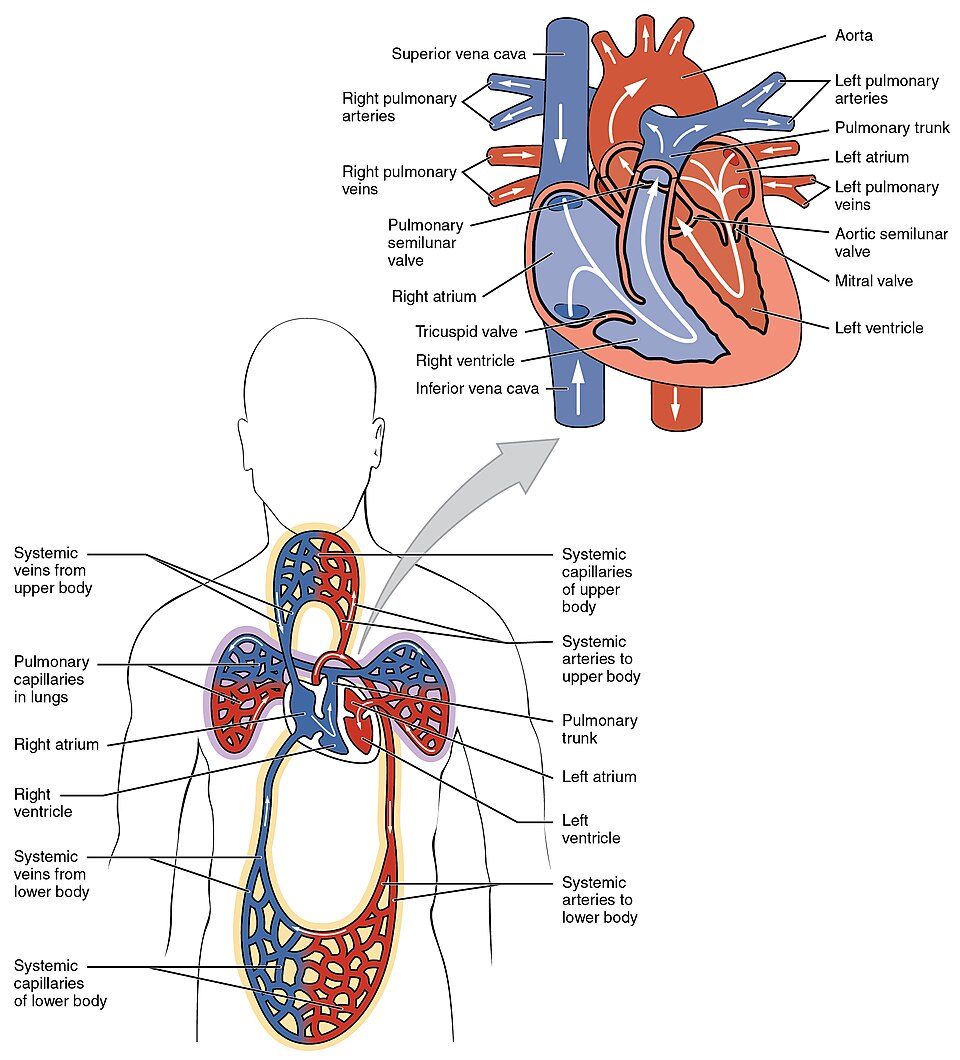
The system has three main components: the heart, the blood vessels, and the blood itself. The heart is a muscular organ with four chambers. The two upper chambers, the atria, receive blood. The two lower chambers, the ventricles, push blood out. The right side of the heart sends deoxygenated blood to the lungs through the pulmonary circuit, while the left side sends oxygenated blood to the rest of the body through the systemic circuit. Each side works in sequence, which is why a healthy heart behaves like two pumps joined together.
Blood vessels fall into three broad types. Arteries carry blood away from the heart under relatively high pressure, and their thick, elastic walls help maintain that pressure between beats. Capillaries are microscopic vessels with walls only one cell thick, and this is where the real exchange happens: oxygen and nutrients move into tissues while carbon dioxide and wastes move out. Veins return blood to the heart at lower pressure and rely on one-way valves and the squeezing action of nearby skeletal muscles to keep blood moving upward against gravity.
How the Heart Keeps Its Rhythm
The heartbeat begins in the sinoatrial (SA) node, a small cluster of specialized cells in the right atrium. The SA node generates electrical impulses spontaneously, roughly 60 to 100 times per minute at rest. The impulse spreads across the atria, pauses briefly at the atrioventricular (AV) node, and then travels down the bundle of His and into the Purkinje fibers, which trigger coordinated contraction of the ventricles.
Two numbers help describe how well this system performs. Stroke volume is the amount of blood ejected with each beat, typically around 70 milliliters in a resting adult. Cardiac output is stroke volume multiplied by heart rate, which usually comes to about 5 liters per minute at rest. During exercise, cardiac output can rise several times over as the heart beats faster and pumps more forcefully. When I explain this to students, I often point out that the heart is not working harder at rest simply because it is beating; it is adjusting its output to match the body's demands.
Why Blood Pressure Matters
Blood pressure is the force blood exerts against vessel walls. It is recorded as two numbers. The top number, systolic pressure, reflects the pressure during ventricular contraction. The bottom number, diastolic pressure, reflects the pressure when the heart relaxes between beats. The American Heart Association considers readings below 120/80 mmHg to be normal. Persistently elevated pressure, known as hypertension, forces the heart to work harder and gradually damages the arteries, kidneys, eyes, and brain. Because hypertension often causes no symptoms, many people do not know they have it until a complication appears.
Common Problems I See in Class and in Life
Cardiovascular disease remains the leading cause of death in the United States, and many of its risk factors are modifiable. The most common conditions students ask me about include:
Atherosclerosis, in which plaque builds up inside arteries and narrows the channel for blood flow.
Hypertension, which increases strain on the heart and vessel walls over time.
Arrhythmias, which are irregularities in the heart's electrical rhythm.
Venous insufficiency, in which valves in the leg veins weaken and blood pools in the lower limbs.
Each of these connects back to the basic mechanics we just covered. Plaque narrows the vessels that carry blood to the heart muscle itself. Hypertension raises the afterload the ventricles must overcome. Weakened venous valves undermine the muscle pump that returns blood from the legs.
Practical Takeaway: Protecting Your Circulation
You do not need a medical degree to support your cardiovascular system. The physiology suggests several concrete habits that make a measurable difference:
Move regularly. Aim for at least 150 minutes of moderate aerobic activity each week, such as brisk walking. Regular exercise strengthens the heart muscle, improves vessel elasticity, and activates the skeletal muscle pump that helps return blood from your legs.
Know your numbers. Have your blood pressure checked at least once a year, and ask about cholesterol and blood glucose. Early detection is far more effective than treating advanced disease.
Watch sodium and fiber. Most adults consume more sodium than recommended, and the general guideline is to stay below 2,300 milligrams per day. Vegetables, fruits, legumes, and whole grains support healthier cholesterol levels and blood pressure.
Avoid tobacco. Smoking damages the endothelium, the thin lining of blood vessels, and accelerates plaque formation.
Protect your sleep. Chronic sleep deprivation is associated with higher blood pressure and increased cardiovascular risk. Aim for seven to nine hours a night.
My hope is that understanding the system changes how you think about these habits. Your heart is not a machine that simply runs until it stops. It is a responsive organ that adapts to what you ask of it every day. Treat it well, and it will keep delivering the oxygen and nutrients every cell in your body depends on.
Discussion (0)
Leave a Comment