


Every semester, I ask my anatomy and physiology students a simple question: how far does your blood travel in a day? Most guess a few hundred feet. The real answer is measured in miles, and it surprises even the students who already know the anatomy. Your cardiovascular system is a closed loop of pump, pipes, and fluid that never stops moving, and understanding it changes how I think about my own daily habits.
The Engine: A Four-Chambered Pump
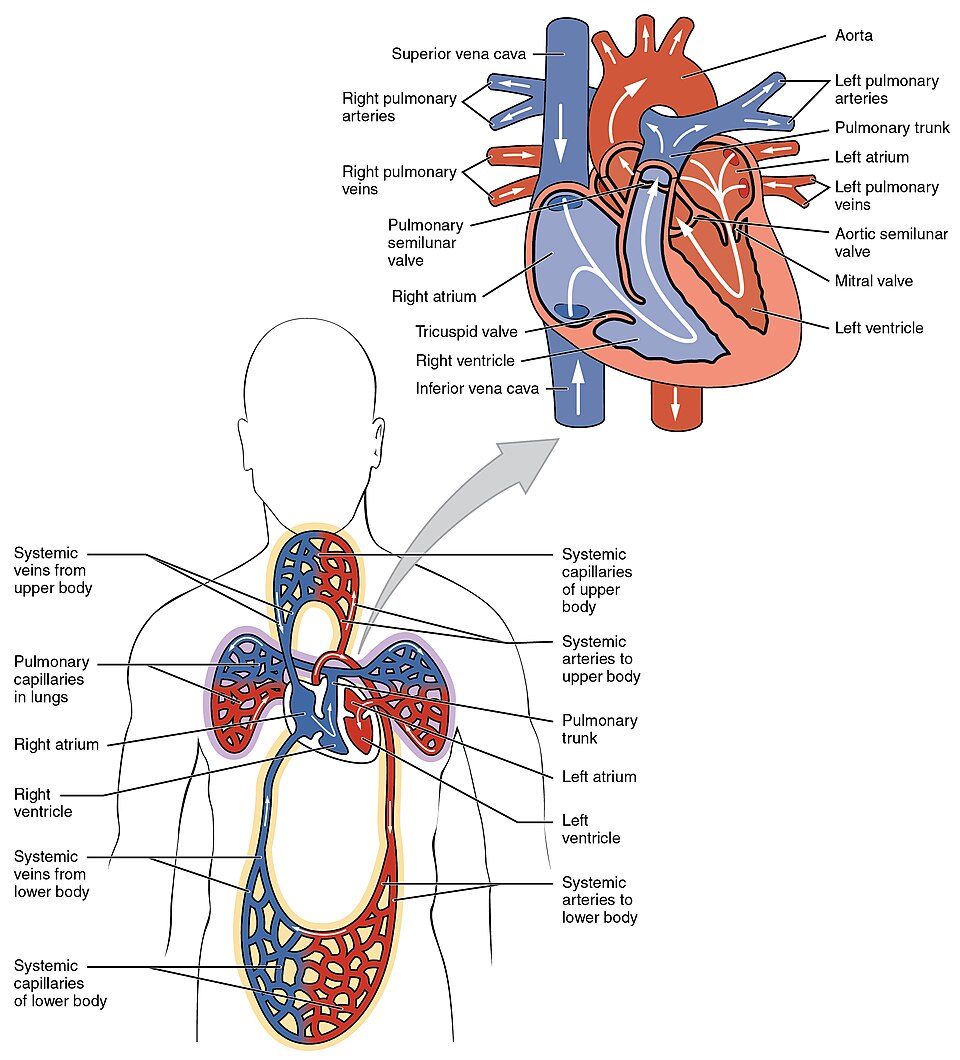
The heart is a muscular organ about the size of a closed fist, and it contains four chambers. The two upper chambers, the atria, receive blood. The two lower chambers, the ventricles, push it out. The right side of the heart handles deoxygenated blood returning from the body, and the left side handles oxygenated blood heading back out to the tissues. The left ventricle has the thickest wall because it must generate enough pressure to push blood through the entire body.
The rhythm comes from the sinoatrial (SA) node, a small cluster of specialized cells in the right atrium that acts as the heart's natural pacemaker. At rest, a healthy adult heart typically beats somewhere around 60 to 100 times per minute. Each beat is a coordinated wave of electrical signaling followed by muscle contraction, and that coordination is why I always tell students that the heart is as much an electrical organ as a mechanical one.
Two Circuits, One Loop
Blood follows two connected routes. Students often find it helpful to picture them as a figure eight:
- Pulmonary circuit: The right ventricle pumps blood to the lungs, where it picks up oxygen and releases carbon dioxide. It then returns to the left atrium.
- Systemic circuit: The left ventricle pumps oxygen-rich blood through the aorta and out to every organ, muscle, and tissue, before it returns to the right atrium.
Because these two circuits share the same organ, a problem on one side quickly affects the other. That is one reason I emphasize to students that the cardiovascular system is never really about just the heart.
The Plumbing: Arteries, Capillaries, and Veins
Blood vessels come in three main types, and each has a distinct job. Arteries carry blood away from the heart. Their thick, elastic walls stretch with each heartbeat and then recoil, which helps keep blood moving between beats. Veins return blood to the heart under much lower pressure, and many contain one-way valves that keep blood from pooling in the legs, especially when you are standing still.
Why Capillaries Matter Most
Capillaries are the thinnest vessels in the body, often only one cell thick in their walls. Although each one is tiny, the body contains an enormous number of them, and together they provide the enormous surface area where oxygen, nutrients, and waste actually cross into and out of tissues. When I explain this to students, I compare it to a delivery network: the highways get the attention, but the final streets are where the real exchange happens.
Blood Pressure: The Number You Should Know
Blood pressure is written as two numbers, such as 120/80 mmHg. The top number, systolic pressure, measures force when the heart contracts. The bottom number, diastolic pressure, measures force when the heart rests between beats. Under the 2017 American College of Cardiology and American Heart Association guidelines, a reading of 130/80 mmHg or higher is classified as hypertension.
High blood pressure is often called a silent condition because it usually causes no symptoms until serious damage has occurred. Over time, excess force injures the delicate lining of arteries, promotes plaque buildup, and makes the heart work harder. This is why I encourage students to treat blood pressure the way they would treat a grade in a course: check it regularly and do not wait for a warning sign.
Practical Takeaways for Your Own Circulation
You do not need a medical degree to support your cardiovascular system. The biology I teach points to a few habits with strong evidence behind them:
- Move daily. Regular aerobic activity strengthens the heart muscle and helps arteries stay flexible. Brisk walking for about 150 minutes a week is a widely recommended target.
- Know your numbers. Ask for your blood pressure at every checkup, and if you have a home monitor, use it correctly and record the readings.
- Protect your vessels. Limiting sodium, eating plenty of vegetables, fruits, and whole grains, and avoiding tobacco all reduce strain on the system.
- Sleep and manage stress. Chronic sleep loss and persistent stress both raise blood pressure over time.
Your blood completes a full circuit of your body roughly once every minute. Every choice you make about movement, food, and rest affects that journey. Treat your circulation as the highway it is, and keep it in good repair.
Discussion (0)
Leave a Comment